
A Rebuke To Idiots
Obsession and Backrooms succeeding is something ... I hope.

The new Star Wars movie, ridiculously titled Star Wars: The Mandalorian and Grogu, isn’t the worst movie I’ve ever seen. There are quite a few movies worse than it: Antoine Fuqua's disastrous biopic, Michael, for instance. And yet, few movies are as uninspired and as embarrassing as the new sci-fi “epic,” which apparently cost $300 million to make and market.
Based on a TV show (that I honestly couldn’t get through the first episode of), Star Wars: The Mandalorian and Grogu—god, I hate writing that out—is a slop fest of catastrophic proportions. It relies on references to other Star Wars moments, has no real plot other than a random assortment of half-assed, incomprehensible fight sequences and appears to be made for a technologically-addled brain that can’t handle more than a minute of actual dialogue and plot development.
The movie starts at one place, ends at essentially the same place and looks like shit the entire time in-between.
Easily, the best performance in it is by a puppet, and then the runner-up is Martin Scorsese, who has like five lines of dialogue, and then in third place is my sister, who said “that was terrible” when the movie finally ended. In trying to make a blockbuster that appeals to everyone by giving them everything possible, Disney ultimately made nothing, an intellectual property extravaganza made to sell Baby Yoda toys and make new theme park rides.
Now, this isn’t anything new. I’m far from the first person to get exhausted by Disney’s live-action retreads and IP Glup Shitto spectaculars. But, for the first time in a long time, it looks like paying audiences are waking up. Or they’re at least so fed up with the Star Wars brass’ lack of ideas, in particular, that they’re just not going.
I hate to be the “let’s look at the box office” guy, but let’s look at last weekend’s box office, in which the third week of the new Star Wars movie dropped 70.1%, eventually ending up in third place behind two very exciting horror movies.
Made for under $1 million, Obsession continued its frankly historic ways, jumping in its third week, up 14.3%. And it only lagged behind Backrooms, an avant-garde horror movie that relies on uncomfortably long takes and a 30,000-square-foot laybrinthe set. The YouTube adaptation made by a 20-year-old has already made over $81 million and is A24’s biggest opening ever; it’s going to keep on growing, as well.
Both of these movies are made by YouTubers and are fully fleshed out horror and/or horror-adjacent thrillers that rely on compelling filmmaking and pivotal performance. Oh, and perhaps most importantly, great word-of-mouth.
Backrooms and Obsession are meant to be seen in theaters, with other (not talking nonstop) audience members. Unlike Star Wars: The Mandalorian and Grogu—that’s the last time I’m writing that out—the Kane Parsons and Curry Barker movies aren’t dumbed down after being tested into oblivion and shot on soundstages. They’re original works that couldn’t be made by anyone else. And although they’re both ostensibly based on IP—the Backrooms thread and a Monkey’s Paw-esque wish, respectively—they’re both steadfast in what they should be and keep the audience guessing until their (admittedly fucked-up) conclusions.
In total, May featured 25.5 million guests at AMC (and AMC-owned theaters), which was the highest-attended month of May since 2019.
Now, things aren’t going to change immediately. We’re quickly approaching a nobody-asked-for-this Masters of the Universe adaptation, and we have a Shawn Levy Star Wars film *shudders* next year. Plus, more Marvel dreck, a Taylor Swift Toy Story and an Ariana Grande-led Focker-in-Law sequel on the way. But hopefully, the tide is (very slowly) turning, and people with power in the industry will start making smaller mid-budget movies that can expand instead of depending on movies made for hundreds of millions of dollars needing to make a billion to break even.
This all reminds me of Cord Jefferson’s Oscar speech a few years back, in which he sermonized on what the future of movies should be…
I understand that this is a risk-averse industry. I get it. But $200 million movies are also a risk, you know. And it doesn’t always work out, but you take the risk anyway. And instead of making one $200 million movie, try making twenty $10 million movies or fifty $4 million movies. There are so many people, I just feel so much joy being here. I felt so much joy making this movie, and I want other people to experience that joy. And they are out there, I promise you. The next Martin Scorsese is out there. The next Greta is out there, both Gretas. The next Christopher Nolan is out there, I promise you. They just want a shot.
Maybe this is just a blip—these are two horror movies, admittedly a genre that has a dedicated, obsessive fan base and can be made for less money—and yet, it’s nice to be optimistic about the future of filmgoing, especially when things are being led by younger directors who are over (or at least futzing with) the entire rigamarole of the Hollywood machine.
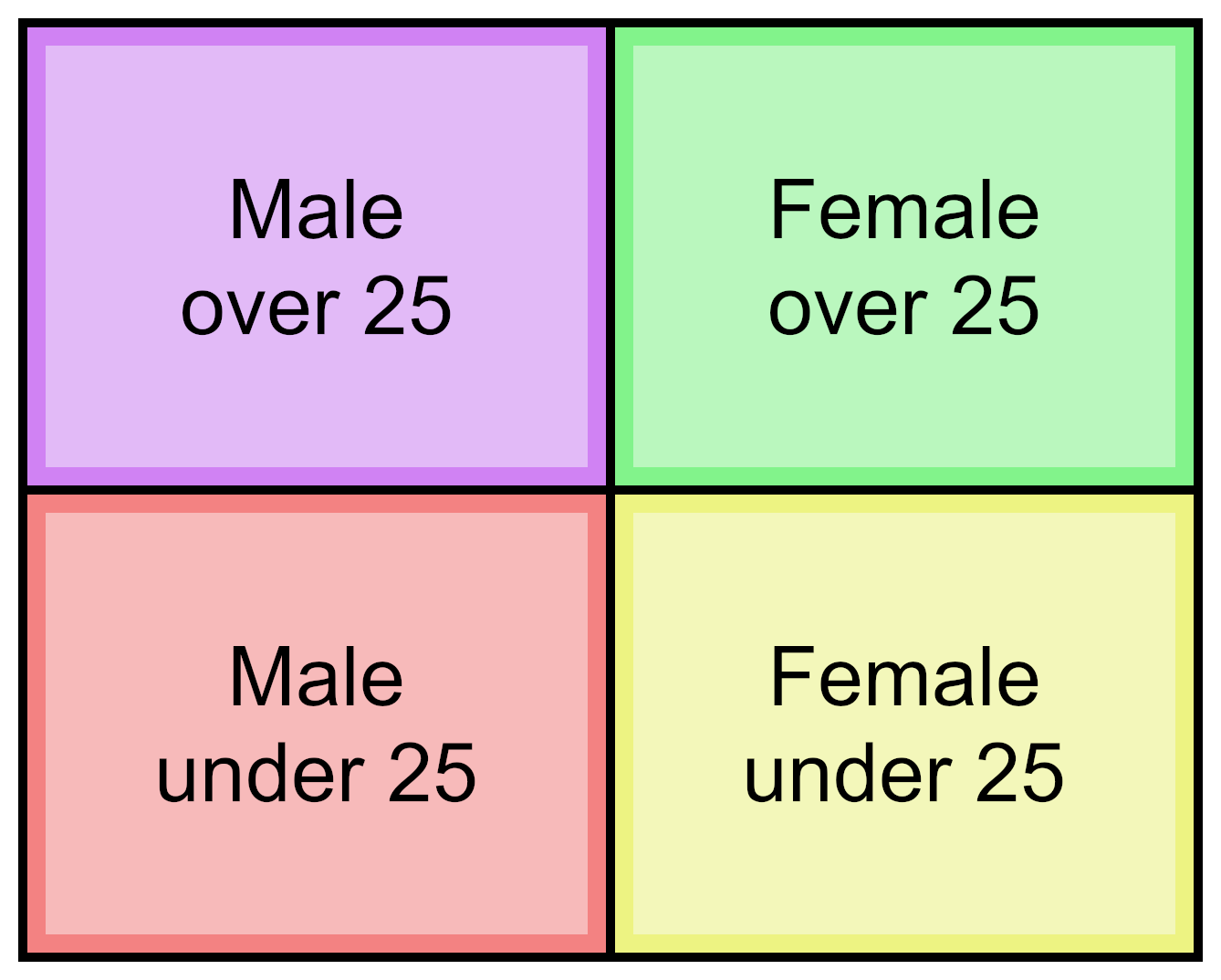
At a certain point, the idiots at the top forgot that they weren’t supposed to make movies for every quadrant simultaneously, but to make different movies to satisfy every quadrant, of course with some overlap. Eventually, you make too much garbage and people start tuning out. Even the flaws in Obsession and Backrooms show room for improvement and more space to grow. That’s what we should want out of our movies. Not this…
Despite it only being June, we’ve already had a handful of great movies this year, and it’s not just in the horror genre. I’ve already written about Nirvanna the Band the Show the Movie, The Drama, Send Help and Project Hail Mary, which all did well (to varying degrees) in theaters and are hand-made projects with ideas behind them. You can tell people wanted to make these movies; they weren’t required to for a corporate behemoth. And we haven’t even gotten to the sheep-led detective mystery-comedy written by the man who made Chernobyl, which is actually really good and very nearly made me cry. If that’s not something new, I don’t know what is.
There’s good stuff out there, and it seems like audiences are hopefully/finally shunning the CGI slop made solely for profit and to keep the lights on. Of course, those movies aren’t going anywhere anytime soon, but if enough filmgoers say no, things will start to change.
If we’ve learned anything from the last few weeks, it’s that people want to be in movie theaters. Give them reasons to keep on going.